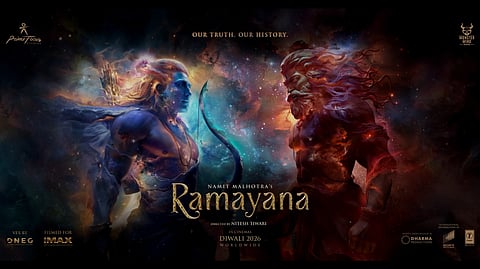

For generations, Ramayan has not just been a story — it has been an emotion, a cultural memory and a sacred part of millions of people’s lives. Every attempt to bring this epic on screen carries a huge responsibility. But the upcoming cinematic adaptation of Ramayan has found itself surrounded by controversies even before its grand release, proving that recreating a timeless epic in today’s era is no easy task.
The film, being made on a massive scale with a star-studded cast, has created excitement among audiences, but along with anticipation came criticism, debates and online battles. From casting choices to creative freedom, every detail has been placed under public scrutiny.
Casting: A Modern Face for Ancient Characters
One of the biggest talking points has been the casting of popular actors in roles that hold deep religious and emotional significance. The choice of actors like Ranbir Kapoor as Lord Ram and Sai Pallavi as Sita sparked mixed reactions.
While many fans believe that talented actors can bring a fresh cinematic experience to these legendary characters, others argue that such roles require not just acting skills but also a certain image and sensitivity. The debate reflects a larger question — should mythology be presented exactly as people imagine it, or should filmmakers have creative freedom to interpret it?
The Pressure of Living Up to History
The shadow of previous adaptations, especially the iconic television series Ramayan, remains huge. For many viewers, the characters of Ram and Sita are permanently associated with the performances they grew up watching.
The new film is therefore not competing only with other movies; it is competing with memories, emotions and decades of audience attachment.
VFX, Budget and the ‘Epic’ Expectations
The makers have promised a global cinematic experience with advanced visual effects and a massive production scale. However, Indian audiences have become increasingly demanding after seeing international fantasy films. A weak visual presentation or inaccurate depiction could quickly trigger criticism.
The challenge is balancing spectacle with authenticity — making a film that feels grand without losing the spiritual essence of the story.
Social Media: The New Battlefield
The controversy around Ramayan also highlights how social media has changed movie discussions. Before a film reaches theatres, hashtags, fan wars and criticism can shape public opinion.
A single poster, interview statement or behind-the-scenes update can become a national debate within hours. Today, filmmakers are not only creating movies; they are navigating a highly sensitive digital environment.
Faith vs Filmmaking: The Bigger Debate
The controversy around Ramayan raises an important question: where should the line between creative interpretation and cultural responsibility be drawn?
Cinema has always retold mythology in different forms. But when the subject is connected with faith, filmmakers carry an extra burden. Audiences expect not just entertainment but respect for the emotions attached to these characters.
The success of Ramayan will ultimately depend on whether it manages to satisfy both worlds — those looking for a breathtaking cinematic experience and those protecting the emotional connection they have carried for years.
For now, one thing is clear: before its first scene reaches theatres, Ramayan has already become one of the most discussed films of the decade. The real verdict, however, will come when the audience finally watches the epic unfold on the big screen.
