
The southwest monsoon is expected to reach Jalandhar by the end of June or during the first week of July 2026. Ahead of the monsoon season, the Municipal Corporation (MC) Jalandhar claims to have accelerated preparations to tackle waterlogging and drainage issues across the city.
Speaking to TRUE SCOOP, Municipal Corporation Superintending Engineer (SE) O&M Jaspal Singh said that all 8 Sewage Treatment Plants (STPs) in the city are functioning properly. He added that backup arrangements have also been made in case of power outages during heavy rainfall. “In case of electricity failure, the STPs can continue operating on diesel,” Singh said.
When questioned about the recurring waterlogging problem in major areas such as 120-Feet Road, Jyoti Chowk and Damoria Underpass, Singh attributed the issue to the geographical nature of these locations. “These are low-lying areas, which makes them more vulnerable to waterlogging during heavy rainfall,” he stated.
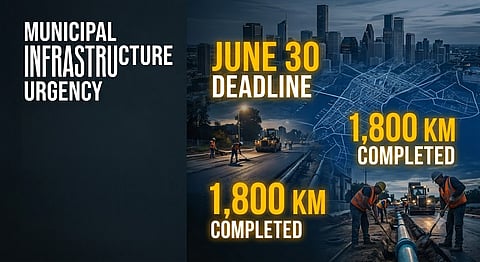
According to Singh, the Municipal Corporation is currently carrying out desilting work across nearly 1700-1800 kilometres of sewage lines in the city. He further claimed that the cleaning of road gullies and sewage networks is expected to be completed by June 30, 2026.
The civic body has also strengthened its machinery ahead of the monsoon. Singh informed that 10 additional super sucker machines and 9-10 new jetting machines have been procured, increasing the total number of jetting machines available with the corporation to around 16-17.
He further said that generator sets on rent will be available by July 1 to ensure uninterrupted functioning of machinery during emergencies. Speaking on drainage preparedness, Singh claimed that the city’s drainage system would now be able to clear logged water within nearly 2 to 2.5 hours during normal rainfall conditions.
“Previously, the water clearance process used to take around 7-8 hours,” he said, while adding that prolonged rainfall for three to four consecutive days could still create difficult conditions.
The MC also identified several major waterlogging hotspots in Jalandhar.
● 120-Feet Road, an important commercial and residential stretch connecting Kapurthala with Jalandhar Railway Station, has previously witnessed waterlogging lasting between 42 to 72 hours.
● Jyoti Chowk: one of the city’s busiest commercial hubs and market areas, also remains vulnerable during heavy rainfall.
● Damoria Underpass: popularly known as Damoria Pull near Jalandhar City Railway Station, often accumulates nearly 2-4 feet of water during normal monsoon spells.
● Transport Nagar: located between Pathankot Chowk and Focal Point, continues to face chronic and long-lasting waterlogging issues due to the lack of an efficient stormwater drainage network.
