
Introduction
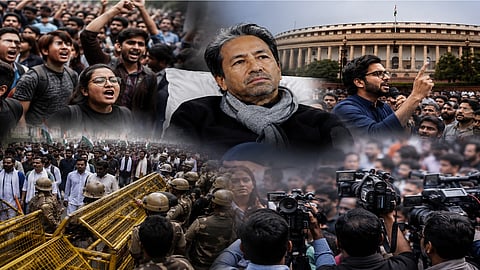
The CJP protest has grown from a student-led demonstration into a major national debate over examination reforms, student concerns, government accountability, and the right to protest. The movement witnessed a prolonged hunger strike by activist Sonam Wangchuk, the Sansad Chalo march, clashes with police, support from celebrities, political reactions, and direct statements from the Prime Minister.
How Did the CJP Protest Begin?
The movement started on June 6, 2026 at Jantar Mantar, Delhi after students raised concerns over alleged irregularities in competitive examinations and demanded reforms in the examination system.
Protesters alleged that issues such as paper leaks, delays, and administrative failures were impacting the future of lakhs of students preparing for competitive exams.
The main demands of the protesters included:
A transparent and secure examination system
Strict action against those responsible for alleged irregularities
Accountability from authorities
Protection for students and protesters facing legal action
A direct dialogue between the government and student representatives
June 28: Sonam Wangchuk Begins Hunger Strike
The protest gained nationwide attention when activist Sonam Wangchuk began an indefinite hunger strike on June 28, 2026, at Delhi’s Jantar Mantar. Wangchuk joined the movement to highlight students’ concerns and demand action from authorities.
His hunger strike became a major symbol of the protest, with supporters gathering at the protest site and raising their voices in support of student demands. As the fast continued, concerns over his health increased, putting more focus on the government’s response.
Celebrity Support Brings More Attention
The CJP protest received support from several celebrities and public figures, who expressed concerns over student issues and the handling of the demonstrations.
Actors and personalities shared messages supporting the protesters’ demand for dialogue and peaceful resolution. Their reactions helped amplify the issue on social media and brought more public attention to the movement.
July 18: Sonam Wangchuk Shifted to Hospital as Health Deteriorates
As Sonam Wangchuk’s hunger strike continued for several weeks, concerns over his health started increasing. After days of fasting, his condition reportedly deteriorated, following which he was shifted to a hospital for medical monitoring and treatment.
The move became another major moment in the CJP protest, with supporters raising concerns about his health and urging authorities to address the issues raised by the protesters. Medical teams continued to monitor his condition while discussions around the protest demands continued.
Wangchuk’s prolonged fast remained one of the biggest highlights of the movement, drawing attention from political leaders, celebrities, and people across the country.
July 20: ‘Sansad Chalo’ March
After weeks of demonstrations, CJP supporters announced the ‘Sansad Chalo’ march on July 20, 2026. The objective of the march was to take their demands directly towards Parliament and draw attention from lawmakers.
Ahead of the march, security arrangements were increased in central Delhi, with barricading and deployment of security personnel.
July 20: First Parliament Monsoon Session
The CJP protest also coincided with the beginning of the Monsoon Session of Parliament, bringing the issue into the political spotlight.
As Parliament proceedings began, opposition leaders raised concerns related to student issues, examination irregularities, and the handling of the protests. The government, meanwhile, highlighted its efforts towards reforms and measures aimed at addressing concerns related to the future of young people.
The timing of the protest during the Parliament session increased political attention, with both the government and opposition using the platform to present their views on the issue.
Baton Charge and Clash With Police
During the march, tensions escalated between protesters and police. As demonstrators attempted to move beyond restricted areas, police action was taken to control the crowd. The incident involved allegations of baton-charge and use of tear gas force against protesters.
Videos from the protest quickly went viral, leading to widespread debate over police action, protest rights, and crowd management. While protesters accused authorities of excessive force, officials maintained that steps were necessary to maintain law and order.
Rahul Gandhi’s Sit-In Outside PM’s Residence
The protest also received political support from opposition leaders. Congress leader Rahul Gandhi joined the protests and staged a sit-in demonstration outside Prime Minister Narendra Modi’s residence, demanding that the concerns raised by students be addressed.
The move intensified political discussions around the protest, with opposition leaders questioning the government’s handling of student grievances.
PM Modi’s Focus on Fast-Track Courts for Youth Justice
Amid the ongoing debate around student concerns and examination-related issues, Prime Minister Narendra Modi highlighted the importance of fast-track courts to ensure quicker justice in matters affecting the future of young people.
The Prime Minister said that cases involving youth, students, and issues impacting their careers should be resolved faster so that uncertainty does not continue for years.
The move was presented as part of the government’s broader approach towards strengthening the justice system and ensuring timely action in matters connected to the aspirations and future of India’s youth.
While protesters continued to press for accountability and reforms, the government highlighted steps aimed at improving transparency, reducing delays, and protecting the interests of students.
JP Nadda Meets CJP Representatives: Protest Continues Over Resignation Demand
Amid growing tensions during the protest, a delegation of the Cockroach Janata Party (CJP) met Union Minister JP Nadda on July 20, 2026 to present their demands. The meeting took place after the Sansad Chalo march and clashes between protesters and police.
During the meeting, CJP representatives placed three major demands before Nadda:
Immediate release of activist Sonam Wangchuk
Resignation or removal of Union Education Minister Dharmendra Pradhan
₹1 crore compensation for families of students who died by suicide following the alleged exam-related crisis
Nadda reportedly assured the delegation that the demands would be discussed with the government leadership, but no immediate commitment was given regarding the resignation demand. He also appealed to protesters to end the sit-in and help restore normalcy.
Protest Will Continue Until Dharmendra Pradhan Resigns’
Despite the meeting with JP Nadda, CJP leader Abhijeet Dipke made it clear that the protest would not end unless their key demand was accepted.
Dipke said that while discussions with the government were a positive step, the movement would continue until Education Minister Dharmendra Pradhan resigns. The CJP maintained that the hunger strike ending and talks with authorities did not mean the end of the agitation
Sonam Wangchuk Ends Hunger Strike, But Movement Continues
After a 26-day hunger strike, Sonam Wangchuk ended his fast on July 23, 2026 following discussions and assurances related to protesters’ concerns.
However, CJP leaders clarified that the end of Wangchuk’s hunger strike was only the end of one phase of the movement. They said the protest at Jantar Mantar would continue until their demands, especially the resignation of Dharmendra Pradhan, were addressed
PM Modi’s Statement: Assurance of Strict Action
Amid the growing controversy over examination-related concerns, Prime Minister Narendra Modi addressed the issue through a social media post, assuring students that the government would take strict action against those responsible for any wrongdoing.
The Prime Minister said that the future of the country’s youth is the government’s top priority and that there would be no compromise with the interests of students. He assured that those involved in irregularities would face stringent action and that steps would be taken to strengthen the examination system.
The statement came as protests intensified, with students demanding accountability and reforms. The government highlighted its commitment towards ensuring a fair and transparent process for young aspirants.
