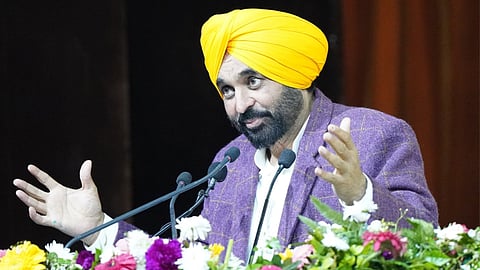

Residents of Punjab are all set to get major relief from expensive medical bills. Punjab Government will roll out the much-awaited and talked about Mukh Mantri Sehat Yojna on January 22, 2026.
With Mukh Mantri Sehat Yojna scheme, Punjab Chief Minister Bhagwant Singh Mann and AAP National Convenor Arvind Kejriwal will ease the healthcare burden of the citizens and ensure quality healthcare for all.
Under Mukh Mantri Sehat Yojna, residents of Punjab will get upto ₹10 lakh cashless health insurance cover. Residents can get free medical treatment in government as well as in private hospitals that are empanelled under this scheme.
If you are looking to find out how can you apply for Punjab Government's free medical scheme, documents required, procedures to follow, who will benefit, etc, check your answers below-
What is Mukh Mantri Sehat Yojna?
Mukh Mantri Sehat Yojna is a health scheme that will be launched by the Aam Aadmi Party Government in Punjab. Under this scheme, cashless medical treatment up to Rs. 10 lakh per family per year will be provided across all government and empanelled private hospitals in Punjab and Chandigarh.
Who will be eligible for Mukh Mantri Sehat Yojna?
Every resident of Punjab is eligible. There is no income limit or age restriction. Farmers, labourers, pensioners, government employees and businessmen, everyone can avail of the scheme.
Who will benefit from Mukh Mantri Sehat Yojna?
Balbir Singh, Punjab Health Minister in one of his press conference said that this scheme will provide a health insurance cover of Rs 10 lakh to 3 crore people in Punjab. Hence, it is expected to benefit 3 crore people of Punjab.
How to apply for Mukh Mantri Sehat Yojna?
Registration will start after Mukh Mantri Sehat Yojna scheme is launched. Health cards will be issued at over 9,000 Common Service Centre (CSC) across the state. Beneficiaries will need to carry their Punjab Aadhaar card and voter ID card.
Note: In case the applicant is a minor then Birth Certificate of member, along with ID Card of head of family and declaration stating relation with the minor member is also required.
For how long will the Rs 10 lakh cashless treatment be available?
According to reports, a single floater card will be issued for the entire family. Rs 10 lakh limit will be applicable per year and can be used collectively by all family members.
Which diseases will be covered and what will not be covered?
Mukh Mantri Sehat Yojna scheme will cover all serious illnesses. The card will be activated upon hospitalisation. It will also cover the cost of all tests and medications. However, cosmetic surgery will not be covered.
In which hospitals can the scheme be availed?
The health card will be valid in all government hospitals. According to reports, the government has also added 650 private hospitals to the scheme. Furthermore, treatment at all medical colleges will also be covered.
Will the scheme be applicable only in Punjab?
No, Mukh Mantri Sehat Yojna scheme will also be applicable in hospitals located in Chandigarh. Punjab CM Bhagwant Singh Mann has already stated that Chandigarh hospitals are being included.
How will hospitals receive payment for treatment?
The insurance company will cover expenses up to Rs 1 lakh under the scheme. The remaining amount will be provided by the Health Department's health agency on a trust basis. The government has allocated a budget of ₹1,200 crore for this.
In January, an agreement was signed with the United India Insurance Company in the presence of Health and Family Welfare Minister Dr Balbir Singh to provide ₹10 lakh cashless health insurance cover to all families of Punjab.
Will patients have to stay in hospital until bills are cleared?
The answer is no. Punjab government has stated that the patient will neither have to pay any money or deal with billing. The patient will come to the hospital for treatment and go home after recovery. Payments will be made directly by the government, and hospitals will process claims at their own level.
When will Mukh Mantri Sehat Yojna scheme's health card be issued?
People would be eligible for treatment once they are successfully enrolled. The cards would take approximately 10 to 15 days to arrive. The government plans to cover the entire state of Punjab within four months.
