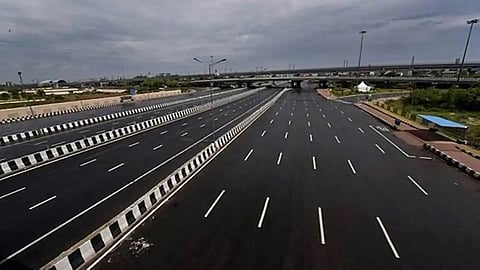

Three years ago, the Centre unveiled 38 new highways for Punjab, 825 km of new roads at a mind-boggling ₹42,000 crore. Leaflets described it as "a new dawn of connectivity". Politicians made promises of quicker journey, easier trade, and improved connectivity to the rest of India.
Now, the scene is quite different.
Dust, controversy, and delays have taken over from the glossy promises.
Of the 38 projects, seven are near completion. Four have been put on hold, one of which may come back, and five are totally cold— stuck in court cases, farmer agitation, and political squabbles over land. That leaves 23 projects worth more than ₹22,000 crore moving at a glacial pace.
Locals are already making light of it: "By the time these roads are completed, our children will be driving on them."
With Punjab boasting approximately 4,000 km of national highways, experts threaten the state will fall even further behind its speedy neighbours unless work gathers speed quickly.
Projects Stuck in the Slow Lane
It is a 25.24 km, 6-lane greenfield bypass to be developed from Rajgarh village on NH-44 till the Delhi-Katra Expressway near Ballowal village.
The project had been originally slated for cancellation in January 2024 by virtue of land acquisition issues.
It was re-tendered to Ceigall India Ltd. in early 2025 at an estimated cost increasing to approx. ₹1,063 crore following a 49% cost overrun from the original amount.
Ground work has not yet commenced because land possession is largely in hand but some plots were tilled during the wheat season.
The project duration is 24 months after mobilization, likely to commence after wheat harvest when contracted labor and machinery mobilize.
Land acquisition problems have time and again hindered progress despite attempts by the Punjab government to offer land to NHAI.
This package of about 31 km was included in the four-laning and expansion of NH-503A highway from Amritsar-Ghoman-Tanda-Una.
In December 2023, the project was canceled due to the recurring issue of land not being available.
Land acquisition issues have resulted in cancellation of this package although other sections of the larger corridor are delayed but ongoing.
Landowners seeking compensation corresponding to prevailing market rates have been a key issue.
The corridor is critical to regional connectivity but this Package-2 is still pending in spite of disputes and delays.
This ambitious 669 km expressway aims at cutting Delhi-Amritsar travel time from 8 hours to 4, and Delhi-Katra from 14 to 6 hours.
Roughly 295 km falls in Punjab. The expressway has been segmented into various packages.
The work is going well in Haryana and Jammu & Kashmir, whereas in Punjab, only 3-90% of the work is done depending on the section.
Land acquisition for approximately 65 km in areas such as Ludhiana and Gurdaspur are not complete, heavily hindering progress.
Just roughly 11 km of land possession has been taken over on some packages; construction equipment is lying idle due to delays.
Increasing land compensation prices and tardy clearances have stretched the deadline over the initial 2023 target.
The expressway is designed as a 4-lane controlled-access road with expansion in the future; tardy land acquisition jeopardizes the whole schedule.
This greenfield highway project is divided into segments amounting to about 85 km with a very high estimated cost of ₹1,368 to ₹1,488 crore.
NHAI first acquired approximately 29.7 km of land but farmers reclaimed much of this, leaving only some 6.1 km ultimately in control.
Compensation issues prompted contractors to serve termination notices and demobilize.
Work on this highway has ceased for the most part, with only half-work completed (some 16% completion reported prior to cessation).
The same issues are encountered along the Ludhiana-Rupnagar Highway-II sector with limited acquisition of land and tardy clearances.
Farmer agitations and demands for greater market-based compensation still hinder early completion.
In all these projects, the major issue is land acquisition and compensation issues, not funding shortages. Political and administrative procrastination, farmer agitations, and entrenched land demands have turned land into the largest stumbling block, causing cancellations, re-awards, and work stoppages despite heavy government investment.
