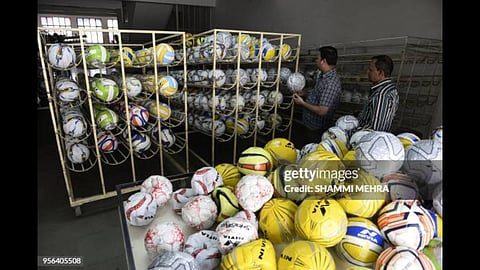

The conflict in West Asia is spilling over. Jalandhar, known worldwide for sports goods, is already feeling it.
Raw material costs have shot up and export orders have stalled. Small units are almost at a standstill. Nearly 80,000 workers and their families now face financial uncertainty.
People who used to stitch footballs and make volleyball nets have seen work dry up. Others who sew gloves are hit too. Monthly incomes have fallen from ₹22,000 to just ₹15,000–17,000.
Small makers, like bat-maker Vijay Kumar Dhir in Basti Sheikh, say continued delays will make it impossible to cover fixed costs. Rent. Electricity. Wages.
The crisis follows a 35% spike in rubber, plastic and resin prices and a wave of delayed or canceled Gulf export orders. Jalandhar’s sports industry brings in around ₹1,200 crore a year and exports about ₹150 crore to Gulf countries. It’s under huge stress now and thousands of households are at risk.
Apart from this, Punjab has witnessed the protest staged by Farmers, in the last month, claiming that this West Asia war is impacting the rice export. Farmers from Punjab, Haryana, Andhra Pradesh and other states heavily rely on the exports of rice for their revenue. But ever since this war is ongoing directly or indirectly people are getting affected.
From the last few weeks the LPG shortage is making headlines, as the West Asia war, corners the Straight of Hormos, the major sea route that connects the Persian Gulf to the Gulf of Oman and to the Indian Ocean.
