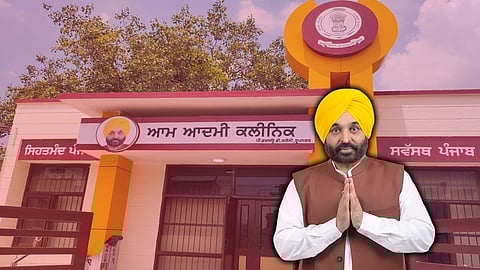

The “Aam Aadmi Clinic” scheme launched under the leadership of Chief Minister Bhagwant Singh Mann in Punjab has emerged as a symbol of a major transformation in the state’s healthcare sector.
This landmark initiative has not only strengthened Punjab’s health system but has also brought meaningful change to the lives of ordinary citizens. Earlier, rural and economically weaker sections had to travel to big cities and government hospitals even for minor ailments.
Now, those same people are receiving free and quality treatment at Aam Aadmi Clinics located in their own neighbourhoods and villages.
This Punjab government scheme has proven to be a significant step towards equality in healthcare. According to Health Minister Dr. Balbir Singh, a total of 881 Aam Aadmi Clinics are currently operational across the state, including 565 in rural areas and 316 in urban areas.
Through these clinics, around 73,000 patients receive free treatment every day, reflecting the growing public trust in the initiative and its role as genuine public service.
The achievements of these clinics are remarkable. Over the past few years, 4.20 crore citizens have been treated at Aam Aadmi Clinics. Of these, 2.29 crore patients availed general OPD services, while medical tests were conducted for more than 1.91 crore people.
These include 6.13 lakh blood tests and 2.48 lakh sugar tests, all conducted free of cost, highlighting the Punjab government’s commitment to healthcare without putting financial pressure on the public.
The scheme has been especially beneficial for women, children and the elderly. Reports indicate that 13.9 lakh women, 6.13 lakh children, and 2.48 lakh elderly people have received treatment at these clinics.
This underscores the government’s equal focus on all sections of society. The initiative is not just a healthcare project but has also become a model of social justice, ensuring equal health rights for everyone.
Beyond treatment, the Punjab government is also focusing on health awareness. Aam Aadmi Clinics have been developed as “Health Awareness Centers”, where patients are educated about disease prevention, nutritious diets, exercise and the importance of regular health check-ups. This approach is helping improve lifestyles and promoting preventive healthcare.
Health Minister Dr. Balbir Singh stated that these clinics are not only making healthcare services easily accessible but are also ensuring the availability of doctors and paramedical staff in every village. This has led to decentralisation of health services and strengthened healthcare infrastructure in rural Punjab. As a result, people no longer need to visit district hospitals for minor ailments, reducing the burden on larger medical facilities.
Chief Minister Bhagwant Singh Mann has consistently maintained that the objective of Aam Aadmi Clinics goes beyond treatment and aims to make Punjab a “healthy and self-reliant state.”
This governance model has also inspired other states, where discussions are underway to adopt Punjab’s approach. The Mann government has demonstrated that with clear intent and people-centric policies, real change is achievable.
Today, a common sentiment resonates across Punjab — Aam Aadmi Clinics are not merely buildings, but symbols of public service. They represent a new vision that has brought healthcare closer to every household. This initiative led by Chief Minister Bhagwant Singh Mann and his team reflects how a sensitive government can fulfil public expectations. It is not only a step towards better healthcare, but a true example of public welfare, positioning Punjab as a model state in the country.
