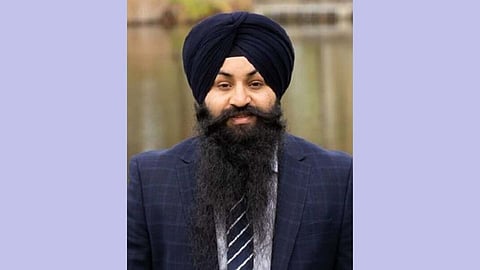

New Zealand's largest-ever drug bust has revived focus on Baltej Singh, the nephew of Satwant Singh -- one of the two bodyguards involved in the assassination of late Indian Prime Minister Indira Gandhi in 1984 -- highlighting a complex intersection of "international crime, historical legacy and legal complexity", a report said on Monday.
Citing a recent investigation by New Zealand's largest news organisation, Stuff, the Khalsa Vox report said that Baltej Singh has been publicly identified as the central figure behind the record-breaking drug seizure.
The findings published on March 28, the report said, mark the first instance of a New Zealand media outlet naming him, following his decision to drop long-standing legal protections that have kept his identity hidden.
"For nearly two years, Singh's identity remained protected under New Zealand's strict name suppression laws -- legal provisions that allow courts to restrict publication of an accused person's identity. However, these protections apply only domestically. International media outlets, including Indian publications and Canada's CTV News, had already revealed his name in earlier reports," the Khalsa Vox report detailed.
"Analysts suggest that Singh's decision to withdraw his suppression request reflects a practical reality: once widely reported overseas, the legal battle to maintain anonymity within New Zealand had become both costly and ineffective," it added.
According to the report, the investigation by New Zealand's authorities began with a fatal incident on March 2, 2023, when 21-year-old Aiden Sagala died after consuming liquid methamphetamine concealed in beverage cans labelled 'Honey Bear Beer'.
What initially seemed to be an isolated tragedy soon escalated into a nationwide probe.
"Authorities traced the source to a storage facility in Auckland, where they uncovered approximately 700 kilograms of liquid methamphetamine -- the largest seizure of its kind in New Zealand's history. The drugs had been ingeniously disguised within everyday imports: kombucha shipments from the United States, coconut water from India, and tens of thousands of beer cans shipped from Canada," it stated.
The magnitude and sophistication of the operation, the report said, led law enforcement to launch a large-scale investigation under "Project Lavender".
"Singh was apprehended at Auckland Airport while attempting to board a flight to Dubai, booked on the same day. Investigators allege the timing indicated an attempt to flee the country as the investigation closed in. He was later convicted and sentenced to 22 years in prison on charges including the importation of methamphetamine, ephedrine, and cocaine," it mentioned.
"A co-accused, Himatjit Jimmy Singh Kahlon, was found guilty of manslaughter for distributing the meth-laced cans that led to Sagala's death. He received a 21-year sentence," it added.
The report further noted that as the probe unfolded, New Zealand Police seized assets valued at around NZ$36 million, including real estate suspected to be linked to the drug network.
Emphasising the broader implication, it said, "For New Zealand, the case represents not only its largest drug seizure but also a stark reminder of how international networks -- and historical legacies -- can intersect in unexpected and troubling ways."
IANS
