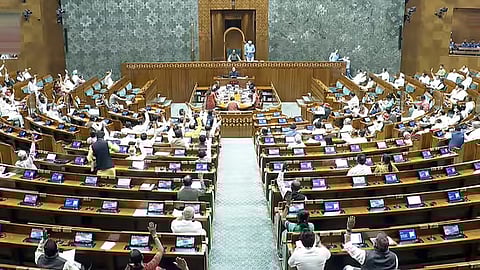

The Centre has drafted an amendment to the Nari Shakti Vandan Act, which aims at increasing the number of seats in Lok Sabha and reserving a significant percentage of them for women. It was approved by the Cabinet in a meeting headed by Prime Minister Narendra Modi.
Under the new proposal, seats in the House would be increased from 543 to 816. Out of these, 273 seats would be reserved for women. It could be one of the most substantial amendments to the Indian Parliament structure in many years.
To accommodate the amendments, the government has announced an extension of the Budget Session of Parliament and convened a special session from 16 to 18 April. The amendments are likely to be taken up during the said period and possibly passed. If enacted, the legislation would be enforced from March 31, 2029.
The reservation would be made using a vertical scheme, which means that some seats reserved for Scheduled Castes and Scheduled Tribes would also be reserved for women.
This would require introducing another law amending the Delimitation Act. The bill to amend the delimitation act will define constituencies and the final allocation of seats under the new delimitation. There are suggestions that the new delimitation may rely on the numbers released during the 2011 census rather than wait for the census in 2027.
The proposed change is bound to have far-reaching implications on many states. For instance, Uttar Pradesh stands to gain the most. It can increase its number of seats from 80 to over 120. More than 40 seats can be allocated for women in this state. Other states such as Maharashtra can get 24 seats reserved for women. Other states include Bihar, Madhya Pradesh, Tamil Nadu, Jharkhand and Delhi.
The changes will affect parliament as well as state assemblies. They will affect union territories including Delhi, Jammu and Kashmir, and Puducherry.
The demand for reservation of women in India dates back many years. In fact, the issue of reservation was proposed way back in 1931, during the era of India’s freedom movement. Many governments over the years had considered implementing the proposal for women’s reservation, but the law could never become a reality, despite several deliberations by numerous committees and governments.
Until 2023, it was only after the passing of the Nari Shakti Vandan Act and the consent of President Droupadi Murmu that this law became a reality. With the proposed amendment, it is now intended to implement the act on an extensive scale.
With the passage of the amendment, there will be a greater inclusion of women in the process of making laws. It is likely to alter the entire political scenario in India and take it in a new direction.
