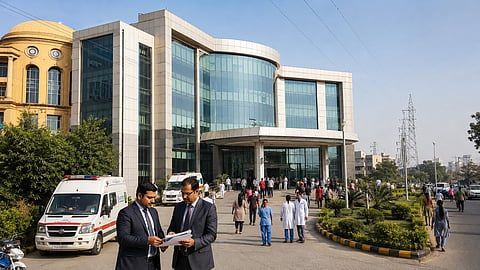

Jalandhar's healthcare sector could witness a significant transformation as several private healthcare companies are reportedly exploring acquisitions and partnerships with established hospitals in the city and according to sources, discussions are underway with multiple hospitals, although no official agreements have been announced so far.
Sources say Jalandhar has emerged as one of the important healthcare centres in North India over the years and the city is home to several multi-speciality hospitals, specialist doctors, dental hospitals and advanced medical facilities that cater not only to residents of Jalandhar but also to patients from nearby districts, including Nawanshahr, Kapurthala and other parts of the Doaba region.
One of the key reasons behind the growing interest is the large NRI population connected to the region and according to sources, many NRIs living in countries such as Canada, the United Kingdom and the United States visit Jalandhar, particularly during the winter months, to undergo medical treatment. Healthcare in these countries is often expensive or involves long waiting periods for certain procedures and as a result, many patients prefer getting treatment in Jalandhar, where specialist care is available at comparatively lower costs.
Sources claim that this steady patient inflow has made the city's established hospitals attractive to large private healthcare companies looking to expand their presence in Punjab and North India and instead of setting up entirely new hospitals, these companies are reportedly interested in acquiring or partnering with existing institutions that already have infrastructure, experienced doctors and an established patient base.
According to sources, both large and medium-sized hospitals have received interest from private healthcare firms and hospital owners are reportedly receiving different types of proposals rather than only outright purchase offers.
Sources say some companies are offering complete acquisitions, while others are proposing partnership models or revenue-sharing arrangements and in several cases, the proposal reportedly includes purchasing the hospital while retaining the existing doctors and management team under long-term contracts for several years. This would allow experienced doctors to continue practising while the corporate group manages operations and future expansion.
According to sources, some hospital owners have received multiple offers from different companies simultaneously and reportedly, offers ranging from around Rs 100 crore to Rs 250 crore are being discussed in certain cases, depending on the hospital's size, reputation and infrastructure, however, none of these figures have been officially confirmed by the hospitals or the companies involved.
Sources further say that increasing operational challenges have also become a factor in these discussions. Doctors and hospital owners reportedly face pressure from various issues, including disputes over minor incidents, public disturbances and alleged threatening or ransom calls and some hospitals have reportedly experienced such incidents in recent years, while others may choose not to report them publicly.
Healthcare experts believe corporate investment could bring several advantages if acquisitions take place. Larger healthcare companies generally have greater financial resources to invest in advanced medical equipment, digital healthcare systems, specialised departments and infrastructure upgrades, so they may also introduce standard operating procedures and professional management practices.
An example of this trend has already been seen in Jalandhar. Fortis Healthcare had earlier acquired the 228-bed Shrimann Superspecialty Hospital in an all-cash deal valued at Rs 462 crore, excluding stamp duty and other regulatory expenses, following the acquisition, the hospital underwent further development and expansion of facilities.
However, experts also believe there could be challenges if more hospitals become part of corporate healthcare chains and they say treatment costs could increase because many corporate hospital groups follow standard pricing structures across their network. Services that are currently available at comparatively lower rates in independent hospitals may become more expensive after a takeover.
For instance, experts point out that consultation charges, which currently vary depending on the doctor and hospital, could rise if hospitals adopt corporate pricing models, however, there is no official indication that any specific hospital plans to revise its prices.
At present, all discussions remain at a preliminary stage. No hospital or private healthcare company has officially confirmed any acquisition, partnership or final agreement ans the identities of hospitals involved in the reported discussions have also not been officially disclosed. Sources maintain that negotiations are continuing, but whether they result in final deals will become clear only after official announcements are made by the concerned parties.
