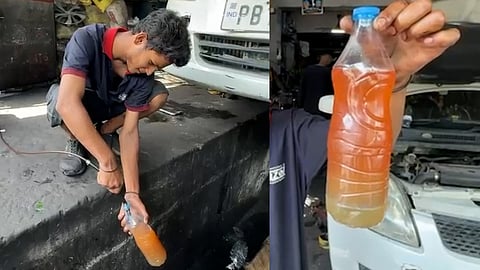

Across the country, a debate has intensified over the use of E20 ethanol-blended petrol. In recent days, several people have claimed that using E20 fuel damages bike and car engines, reduces mileage, and affects vehicle performance. On the other hand, some consumers and automobile enthusiasts recommend premium fuels such as XP95 and XP100 as better alternatives.
Ground reporting from Truescoop
To understand the issue, ground reporter from Truescoop visited local mechanics and members of the public and asked about their experience with E20 fuel. Many claimed that vehicles have started developing more problems since the introduction of petrol containing 20 percent ethanol.
E20 petrol causes engine misfiring
Mechanic Raj Kumar said that ever since E20 petrol became common, the number of vehicles arriving at his workshop with complaints has increased significantly. According to him, the issue has not only troubled customers but has also made the work of mechanics more difficult. He urged the government to look into the matter, stating that earlier, a major vehicle fault would hardly appear only once in several years, whereas now he receives complaints related to two to three vehicles almost every day.
Raj Kumar alleged that E20 petrol causes engine misfiring and leads to a noticeable drop in fuel efficiency. He claimed that complaints of cars malfunctioning after using E20 have become particularly common.
Reduced mileage in vehicles
Another mechanic, Hardeep Singh, echoed similar concerns. He said customers frequently approach him complaining about reduced mileage and engine misfiring after using E20 petrol. During the interaction, he demonstrated a sample of fuel by draining petrol from a vehicle into a bottle. According to him, the petrol settled on the upper layer while the ethanol settled below, which he believes is responsible for the misfiring and reduced mileage experienced by vehicle owners.
Hardeep further claimed that complaints related to auto sensors, which were once rare, have now become increasingly common. He also alleged that fuel pumps in newer Activa scooters are failing more often. According to him, ethanol blending in petrol was previously around 5 percent but has now increased to 20 percent, resulting in more vehicle-related complaints.
Interaction with Pump association president
Meanwhile, Pump Association President Sukhmohan Singh said that ethanol has been blended with petrol for quite some time. He acknowledged that concerns regarding reduced mileage have recently become more widespread. However, he pointed out that oil marketing companies maintain that increasing ethanol content does not negatively impact vehicle performance.
Ethanol is ‘Hygroscopic’
Sukhmohan Singh explained that ethanol is hygroscopic, meaning it absorbs moisture from the atmosphere if left exposed. Once water enters the fuel, ethanol can separate from petrol, a phenomenon that may lead to engine misfiring. He appealed to vehicle owners to ensure that no water enters their fuel tanks, adding that as long as ethanol does not come into contact with water, such issues are unlikely to occur. According to him, the chances of misfiring increase only when moisture contaminates the fuel.
