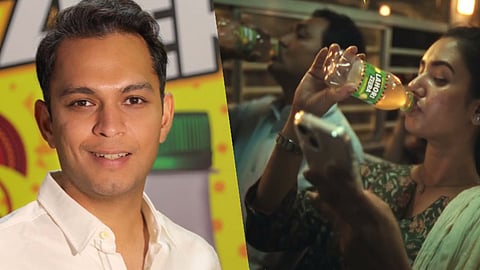

'Make in India for the world', when Prime Minister Narendra Modi said this from the Red Fort during Independence Day speech, it was inevitable that a wave of startup is set to blow in India. However, a very few could have expected that three cousins with their roots in Punjab will found a beverage startup that go on to give competition to well established drinks like Coca Cola, Thumbs Up, Campa Cola, etc.
Lahori Zeera has made a name for itself over the past few years. Its 'chatpata' strong flavour perfectly suits the Indian palate.
According to Fortune India report, Lahori Zeera clocked Rs 535 crore in net revenue in FY25. The brand has now set a target of revenue worth ₹800 crore in the current financial year.
The company, which has stayed profitable and bootstrapped through its first five years, is also gearing up for the GCC market debut, initially targeting the Indian diaspora.
Founded in 2017 by cousins Saurabh Munjal, Nikhil Doda, and Saurabh Bhutna, Lahori Zeera has carved out a niche in India’s crowded soft drink market. Lahori Zeera is basically a carbonated blend of cumin, lemon, black pepper, dry ginger, and sendha namak.
Based in Chandigarh, Saurabh Munjal is Co-Founder & CEO of Archian Foods Pvt Ltd (Lahori Zeera) and Shaurya Suites & Inn LLP (Heritage Haveli).
Saurabh Munjal did his B-Com from Punjab University in 2011. Thereafter, he did his MBA in Finance from Management Development Institute of Singapore.
Munjal first Co-Founded Shaurya Suites & Inn in 2012. Thereafter, he expanded his business acumen to beverage sector. Munjal Co-Founded and became Chief Executive Officer Archian Foods Private Limited i.e. Lahori Zeera.
Lahori Zeera's parent company is called Archian Foods Pvt. Ltd. The company's headquarter is in Fatehgarh Sahib, Punjab.
Saurabh Munjal in a podcast with YouTube channel Indian Silicon Valley said, "What we have done so far is reasonably good but what we want to do from this point is far more important. What we have been able to do is just find proof of concept of what we are trying to build."
"There is no two ways about it. The product has built certain love among consumers and that has happened organically. So, that is genuine proof of concept that there is product market fit. Indians love food. Food and beverages are something inherently in the past. But, how many brands can you think of that are from India in the F&B space? Very very few.
What we want to do is build a world-class beverage brand. We want to sell it around the world. For example Prime, a drink comes in and sells like and do really well. So, if they can come to India, then why can't an Indian brand do the same? That's the thought process."
Munjal further said, "How it all started is actually based on consumer thesis only. So, the primary thesis was we realised India is extremely heterogenous country. Every 100 km, the taste profile, modus operandi, everything changes. But, Indian street foods bind India. So, we realised that the 'chatpata maseladar' strong flavour. This is what binds everybody together. And that is what we wanted to focus on."
Mujal explained, "Somebody formulated a Cola in the US or in the Europe and then eventually came to India because there was no other options. What come to us naturally is Indian street food. Therefore, we wanted to build a brand around ethnic Indian flavours."
"Also what we realised is Thumbs Up. It's a prime example of folks tried to subdue the brand as much as they could but at the end of the day it was the first billion dollar revenue brand for Coke. It clearly shows how much we love our chatpata strong flavours. Lahori is a product of indulgance and hence people started buying not one bottle but full crates."
"For example somebody walks into your house and you want to serve them something like a tea or a coffee or some cold-drink and this is where Lahori Zeera is an option. Also, it fits everywhere and probably that's the reason why it became popular."
Munjal said, "When we started it- we started with a small capacity. It was 96,000 bottles a day. From that time to today, we have a capacity of 50 lakh bottles today 50 lakh bottles we can produce everyday we can produce. In the next four months we can scale up to 80-85 lakhs bottles a day and 6 months from now, the capacity can be around more than 1 crore bottle a day."
