
Jalandhar’s ambitious surface water project aimed at providing 24-hour clean drinking water to every household is facing major delays and the project was expected to bring a new water supply system to city by September 2025 but the target has not been achieved and the current progress indicates that residents may not receive full benefits of the project even by September 2026.
The project is being carried out in two phases and the first phase worth ₹525 crore is still incomplete while the second phase estimated at around ₹400 crore has not yet received approval or a construction timeline.
The project was first initiated in 2012 when efforts began to secure international financial assistance and it was prioritized under AMRUT scheme between 2015 and 2018 and after financial support was secured from Asian Development Bank in 2019 construction work started in 2021 however even after 14 years the first phase remains unfinished.
According to officials around 80% of first phase has been completed and this phase includes bringing water from Beas River through Bist Doab Canal treating it and creating main distribution network and around 20 kilometres of main pipeline still need to be laid and while the raw water treatment plant is nearly ready some important storage and distribution work is still pending.
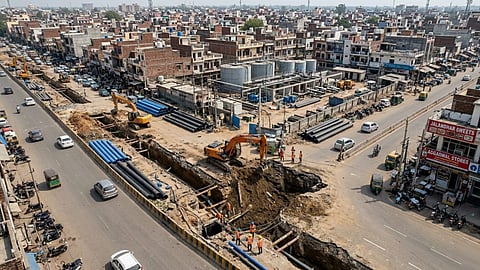
Several factors slowed the project and major city roads had been newly constructed before 2021 Assembly elections making it difficult to obtain permission to dig them up again for pipeline work and COVID-19 pandemic, election-related restrictions and delays in administrative approvals also affected progress.
The ongoing work has caused inconvenience for many residents and roads remained dug up for long periods in several areas, leading to traffic congestion and in some places, road restoration was delayed even after pipelines were installed along with this construction materials and pipes left along roadsides also created difficulties for pedestrians and motorists.
The second phase is still at the planning stage and it includes laying an internal pipeline network across streets and neighbourhoods, installing water meters at homes and commercial establishments, phasing out old tubewells, introducing a new billing system and integrating consumer data into software systems.
Once the project is completed, water bills will be based on actual consumption instead of the current fixed-charge system and water meters will be installed at all domestic and commercial connections and Municipal Corporation says this step is intended to reduce water wastage.
Mayor Vaneet Dhir said the project faced technical and administrative challenges and that approval for second phase was not obtained on time and also stated that first phase is being monitored regularly and efforts are being made to complete it quickly while work on second phase will be taken forward in stages.
