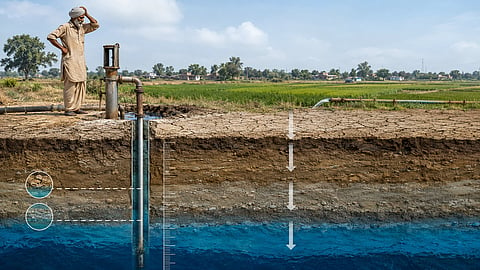

Punjab's groundwater is disappearing at a worrying pace, according to a new study by Punjab Agricultural University. The study shows that the state's average pre-monsoon groundwater level has fallen from 7.8 metres in 1998 to more than 21 metres in 2025 and researchers say this shows groundwater is being depleted faster than previously estimated and that urgent steps are needed to protect the state's water resources.
The findings are important because groundwater is the main source of irrigation for a large part of Punjab's agriculture and experts warn that if the current trend continues, it could affect farming, drinking water availability and the state's long-term water security.
The PAU study found that Punjab is losing groundwater at an average rate of more than 50 centimetres every year and this steady decline over nearly three decades has pushed groundwater levels much deeper underground, making it more difficult to access.
Researchers say the latest findings indicate that groundwater depletion in Punjab is happening faster than earlier estimates suggested and the study highlights the need for immediate action to slow the decline and improve water management across the state.
The study identifies Barnala as the worst-affected district in Punjab in terms of groundwater depletion.
According to the findings:
Barnala and Sangrur are losing more than one metre of groundwater every year.
Patiala is recording an annual groundwater decline of more than 80 centimetres.
Researchers say these districts are witnessing some of the fastest rates of groundwater depletion in the state, raising concerns for agriculture and future water availability.
The study also points out that groundwater levels have fallen below 30 metres in many parts of several districts.
These include:
Ludhiana
Sangrur
Barnala
Patiala
Fatehgarh Sahib
Moga
Such deep groundwater levels mean farmers often have to drill deeper borewells and use more energy to pump water for irrigation.
The study links the decline mainly to Punjab's growing dependence on tubewells for irrigation and according to the findings, tubewell irrigation has increased sharply over the years. It accounted for only 24 per cent of irrigation in 1966-67. By 2024-25, its share had risen to 77 per cent. During the same period, canal irrigation has reduced significantly and it has declined from 58 per cent in 1966-67 to just 22 per cent in 2024-25.
Researchers say this shift has increased pressure on underground water reserves because farmers now rely much more on groundwater than on canal water for irrigation.
While central Punjab is facing severe groundwater depletion, the study notes that some parts of the state still have relatively healthier groundwater levels. Pathankot and Gurdaspur continue to have better groundwater conditions compared to many other districts and the study also says that parts of Fazilka and Muktsar are in a relatively better position than the districts in central Punjab.
To address the growing groundwater crisis, the university has suggested several measures aimed at reducing pressure on underground water resources.
These include:
Encouraging crop diversification so farmers move away from water-intensive crops.
Expanding canal irrigation to reduce dependence on tubewells.
Promoting drip irrigation and other efficient methods of water use.
Increasing groundwater recharge through ponds, check dams and rainwater conservation.
Researchers believe these steps can help slow groundwater depletion if implemented effectively.
Groundwater plays a major role in Punjab's agriculture, which depends heavily on irrigation and a continued decline in groundwater levels could make farming more difficult and increase the cost of accessing water. The study also warns that falling groundwater levels can affect drinking water supplies and pose a long-term challenge to the state's overall water security.
